A heating or cooling system rarely fails overnight. More often it fades — radiators with cold patches, pumps running harder than they should, energy bills creeping up for no obvious reason. The cause is frequently something you never see: magnetite.
What is magnetite and how does it form in a system?
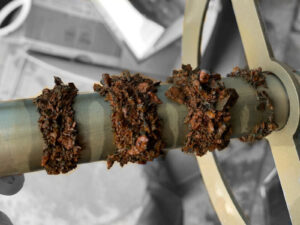
Magnetite is a by-product of corrosion, which is often caused by dissolved oxygen leaking into the piping system. When magnetite starts collecting in the system a thin black sludge accumulates in the system, leading to loss of efficiency in the heating and cooling system.
How magnetite sludge damages heating and cooling systems
As magnetite layers accumulate, the effective pipe diameter narrows, restricting the flow through the circuit and settling in radiators and heat exchangers. This results in reduced heat transfer efficiency, cold spots, higher energy consumption, and accelerated wear on pumps, valves and the boiler. What starts as a small loss of efficiency ends, eventually, in breakdowns, premature replacements… And increased maintenance costs.
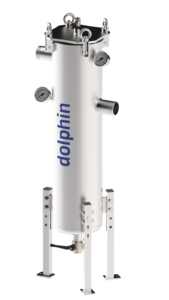
Mechanical magnetite removal with prime-phin
Using mechanical filtration, prime-phin captures ferrous impurities with built-in neodymium magnetic rods — drawing the sludge out of circulation before it can deposit downstream. This translates into measurable results:
- Restored and maintained flow through pipes, radiators and heat exchangers
- Improved heat transfer and energy efficiency
- Improved lifespan for pumps, boilers, and other components.
- Decreased operating and maintenance costs